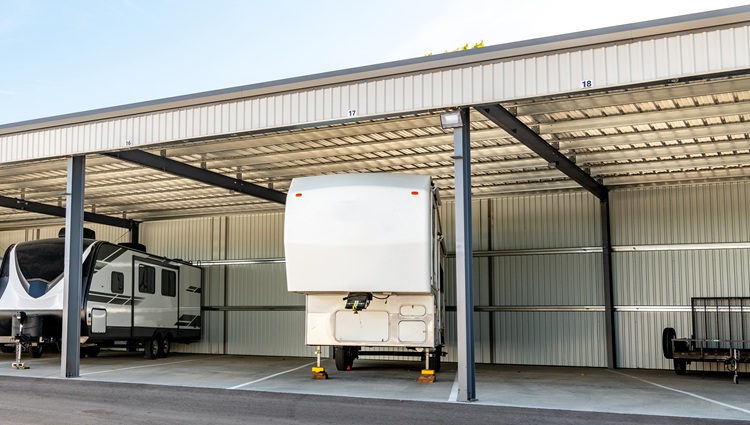
For RV owners, deciding where to store their RV can feel challenging. Whether you choose to keep it parked at home or opt for a storage facility, each option has its own set of advantages and potential drawbacks. In this guide, we’ll explore these factors so you can make an informed decision that best suits your lifestyle and needs.
Storing Your RV at Home
Keeping your RV on your property offers a distinct set of benefits, such as accessibility and cost savings. However, it’s important to weigh these against potential downsides.
Advantages of Home Storage
- Accessibility: Storing your RV at home allows for easy access whenever you’re ready to hit the road. With your vehicle nearby, you can perform regular maintenance tasks or pack up for trips without any hassle.
- Cost Savings: When your RV is kept at home in your driveway or garage, you eliminate monthly fees or rental costs associated with professional storage facilities.
- Security and Monitoring: You can personally monitor the security of your RV when it is stored at home, allowing you to implement any additional security measures you find necessary.
Disadvantages of Home Storage
- Space Concerns: Not all homeowners have sufficient space in their driveways or yards to accommodate an RV, especially larger models that may need a lot of room.
- Zoning Restrictions: Some neighborhoods have zoning laws or HOA rules that restrict RV parking on residential properties, which could limit this option.
- Exposure to Elements: Constant exposure to weather conditions can lead to wear and tear on your RV unless you have a protective covering or designated indoor space.
Storing Your RV at a Storage Facility
Opting for professional storage facilities can provide peace of mind and accommodate RVs of all sizes. Yet, there are also aspects to consider about this choice.
Benefits of a Storage Facility
- Protection from Weather: Most storage facilities offer sheltered or even climate-controlled spaces that protect your RV from harsh weather, which can prolong the lifespan of your vehicle.
- Security Measures: Facilities often employ advanced security systems including surveillance cameras, gated access, and on-site personnel to ensure your RV remains safe.
- Space Availability: These facilities usually offer varying sizes of spaces, suitable for almost any RV size, which ensures proper accommodation regardless of your vehicle’s dimensions.
Drawbacks of a Storage Facility
- Cost Implications: Renting space at an RV storage facility comes with a monthly expense that can accumulate over time.
- Access Restrictions: Depending on the storage facility, there might be limited access hours, which could pose challenges when you want spontaneous adventures.
- Distance from Home: If the facility is far from your residence, it could be less convenient for routine checks or last-minute travel preparations.
Located in Ludington, MI, Point North RV offers ideal solutions tailored to your specific needs when considering how to best store your RV. Whether you’re intrigued by the perks of home storage or need the comprehensive services of a professional facility, our team is here to help guide and support you through every step. Visit us at Point North RV, where we combine expert knowledge with personalized service to ensure your adventures are always memorable and fulfilling. Discover the possibilities with us today!
